
Somalia Calls for Stronger Regional Health Coordination at Geneva Summit
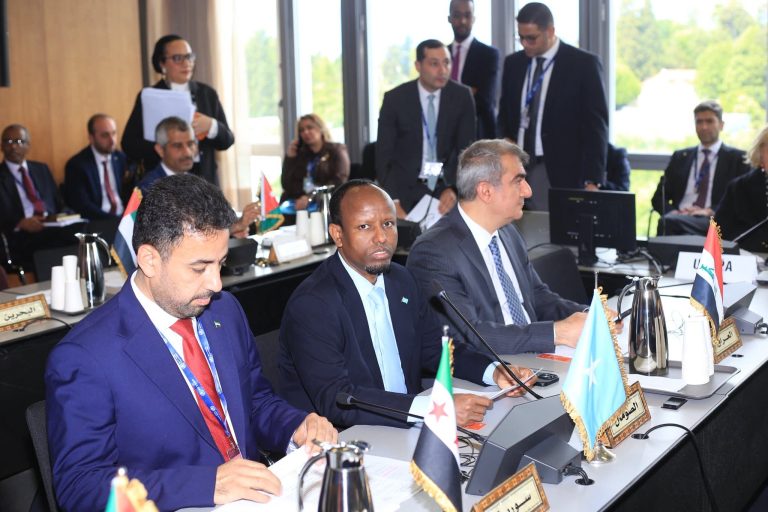
GOOBJOOG NEWS | GENEVA: Federal government of Somalia’s Health and Social Welfare minister Ali Haji Adam has called for stronger regional cooperation and coordinated investment in healthcare systems during the 64th Arab Ministerial Conference of Health held alongside the 79th World Health Assembly in Geneva.
The conference brought together Arab health ministers and senior officials as global leaders gathered this week for the annual World Health Assembly, the main decision-making forum of the World Health Organization.
Discussions this year are focusing on health system resilience, emergency preparedness, disease outbreaks and equitable access to healthcare services.
Speaking during the meeting, Ali Haji Adam stressed the importance of regional collaboration, exchange of medical expertise and coordinated support mechanisms aimed at improving healthcare delivery across Arab countries.
He said collective action was essential to address growing public health challenges, strengthen resilience against health emergencies and support sustainable healthcare development across the region.
The minister’s remarks come as Arab and African countries face mounting pressure on health systems from conflict, climate-related emergencies, infectious disease outbreaks and funding constraints affecting global health programmes.
Delegates at the conference also discussed strengthening blood transfusion services, maternal and child healthcare, emergency response coordination and unified Arab positions on global health governance reforms, according to officials attending the meeting.
The wider World Health Assembly, which runs from May 18 to May 23, has brought together ministers and health officials from nearly 200 countries to discuss global health priorities including antimicrobial resistance, pandemic preparedness, mental health and healthcare financing.
Somalia has in recent years intensified efforts to rebuild its healthcare system after decades of conflict weakened public health infrastructure and limited access to medical services in many parts of the country.
The nation continues to face recurring disease outbreaks, climate-linked health emergencies and shortages in healthcare infrastructure, while the federal government seeks stronger international partnerships to expand healthcare access and improve emergency preparedness nationwide.