
Somalia Calls for Sustained International Support to Cement Reform Gains
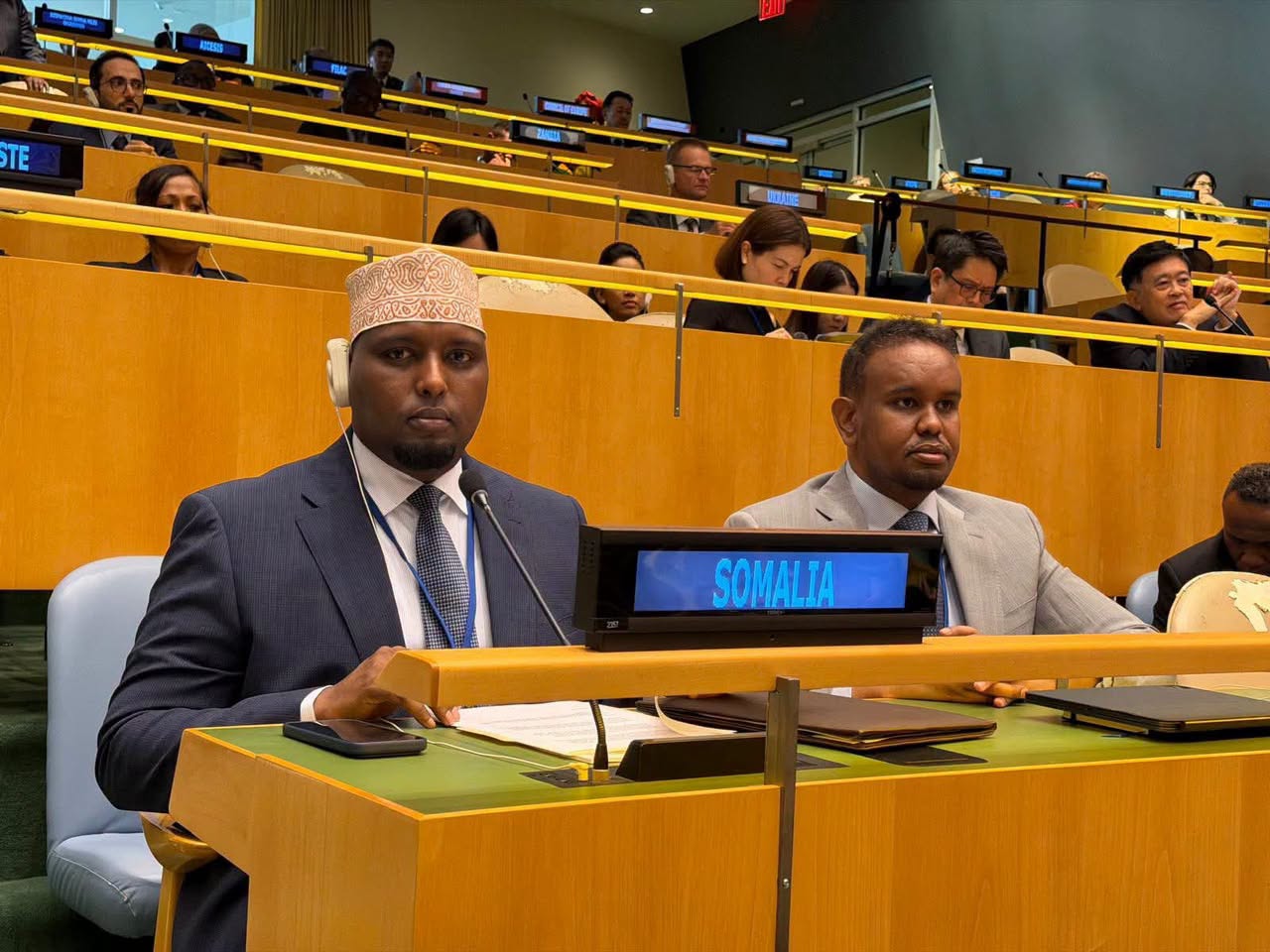
GOOBJOOG NEWS | UNITED NATIONS: Planning, Investment and Economic Development minister Mahmoud Abdirahman Farah has said that a series of political, economic and governance reforms have positioned the country for sustainable development, while calling on international partners to maintain support for its long-term transformation.
Speaking at the ministerial segment of the United Nations Economic and Social Council (ECOSOC), Farah said Somalia had made significant progress in economic management, state-building, security and the rule of law despite continuing challenges.
He cited the country’s completion of the Heavily Indebted Poor Countries (HIPC) debt relief initiative, the lifting of the U.N. arms embargo, progress in restoring democratic governance through one-person, one-vote elections in parts of the country, Somalia’s election to the U.N. Security Council, and military gains against the Islamist militant group al Shabaab as evidence of what he described as a new phase in the country’s recovery.
Farah said Somalia’s National Transformation Plan (2025–2029) provides the framework for moving the country from humanitarian dependence towards sustainable development driven by economic growth, investment and stronger national institutions.
He also said Somalia had strengthened data-driven planning by improving its national statistics system and promoting evidence-based policymaking, measures he said were helping the government better track progress towards achieving the U.N. Sustainable Development Goals (SDGs).
Addressing representatives of U.N. member states and development partners, Farah urged the international community to translate its commitments into concrete support for Somalia’s development priorities, saying continued cooperation would be critical to sustaining reforms and accelerating economic and social progress.
Somalia has pursued wide-ranging economic reforms in recent years with the backing of international financial institutions, seeking to rebuild public institutions, attract investment and strengthen fiscal management after decades of conflict.
While the country has recorded notable gains, it continues to face challenges from insecurity, climate-related shocks and humanitarian needs, underscoring the importance of sustained international engagement.