
Somalia Joins AfCFTA as President Assents to Landmark Trade Agreement
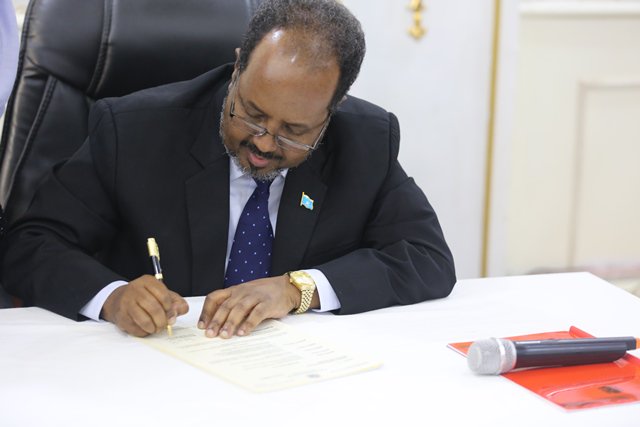
GOOBJOOG NEWS | MOGADISHU: Somalia has formally completed the final domestic step towards joining the African Continental Free Trade Area (AfCFTA), opening the way for Somali businesses to access a single African market of more than 1.4 billion people.
President Hassan Sheikh Mohamud assented to the AfCFTA Agreement after its ratification by the Federal Parliament, according to the Ministry of Commerce and Industry. Somalia can now deposit its instrument of ratification with the African Union Commission, completing its accession process.
The move could give Somali exporters, manufacturers, cooperatives and investors greater access to markets across Africa, while potentially helping the country diversify its economy beyond imports and aid.
Commerce and Industry Minister Gamal M. Hassan described the accession as a turning point for Somalia’s economy, saying membership would provide a platform for industrialisation, investment, value addition and job creation.
“This is not simply a trade agreement, it is a strategic platform for industrialization, value addition, investment, and inclusive economic growth,” the minister said.
For Somalia, however, the significance of the agreement will depend largely on whether local businesses can compete in the continental market and whether the country can overcome constraints such as limited production capacity, inadequate infrastructure and high trade and logistics costs.
The ministry said it would now oversee implementation, including aligning tariff schedules, developing trade instruments and conducting nationwide outreach to traders, exporters, cooperatives and small and medium-sized businesses.
The government also faces the task of ensuring that Somali producers can meet quality, regulatory and supply requirements in foreign markets. Expanding processing and manufacturing capacity could be particularly important if Somalia is to move beyond exporting raw commodities and capture more value from its agricultural, fisheries and livestock sectors.
AfCFTA, established under the African Union, is the world’s largest free-trade area by the number of participating countries. It aims to reduce barriers to trade between African economies, strengthen regional value chains and accelerate industrialisation.
Somalia’s accession comes as the government seeks to build on recent economic reforms, including debt relief and efforts to attract investment and strengthen domestic production. The country has also been promoting its livestock, fisheries and broader blue-economy sectors as potential sources of export growth.
For Somali businesses, the immediate challenge will now shift from gaining access to the African market to being ready to compete in it.