
Somalia Pushes Trade Reforms to Unlock Regional Commerce and Economic Growth
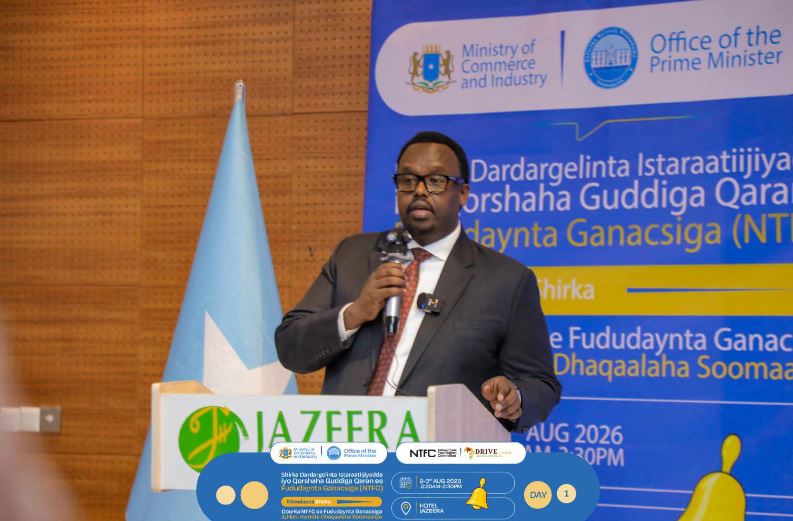
GOOBJOOG NEWS | MOGADISHU: Deputy Prime Minister, Salah Ahmed Jama, has called for deeper regional trade integration and reforms to streamline commerce, saying improving the country’s trading environment is key to accelerating economic growth and attracting investment.
Speaking at the opening of the Scientific Conference and Roadmap Workshop of the National Committee for Trade Development, Jama said trade facilitation is a central component of Somalia’s National Transformation Plan, which seeks to strengthen the country’s economy through structural reforms and private sector-led growth.
The conference brought together government officials, trade specialists and delegates from member states of the East African Community (EAC) to discuss measures aimed at improving trade efficiency and expanding regional economic cooperation.
Jama said Somalia must work with its regional partners to harmonise trade regulations, improve quality standards and remove administrative bottlenecks that increase the cost of doing business and delay the movement of goods across borders.
He also urged African countries to strengthen trade among themselves, noting that intra-African commerce remains below its potential despite ongoing efforts under the African Continental Free Trade Area (AfCFTA) to create a more integrated continental market.
Highlighting sectors with strong growth prospects, the deputy prime minister identified fisheries as one of Somalia’s most promising industries and called for increased investment to boost production, exports and job creation.
“Sustainable economic growth requires a strong private sector, coordinated trade and industrial policies, and greater value addition to domestic products,” Jama told participants.
The workshop comes as Somalia continues implementing economic reforms following its admission to the East African Community in 2024, a move expected to expand market access for Somali businesses while requiring the country to gradually align its trade laws and regulatory framework with regional standards.
Economists say improving customs procedures, transport links and cross-border trade regulations will be crucial if Somalia is to fully benefit from regional integration. The country is seeking to diversify an economy traditionally driven by livestock exports by developing sectors such as fisheries, agriculture and manufacturing, while attracting greater domestic and foreign investment.
The National Committee for Trade Development is expected to use the conference to develop a roadmap for strengthening Somalia’s trade policies and enhancing the country’s competitiveness within regional and international markets.