
Somalia, Refugees International Discuss Investment and Climate Resilience in Agriculture
GOOBJOOG NEWS | MOGADISHU: Somalia’s agriculture ministry and Refugees International have agreed to strengthen cooperation on food security, agricultural investment and livelihood recovery for communities affected by displacement and climate shocks,.
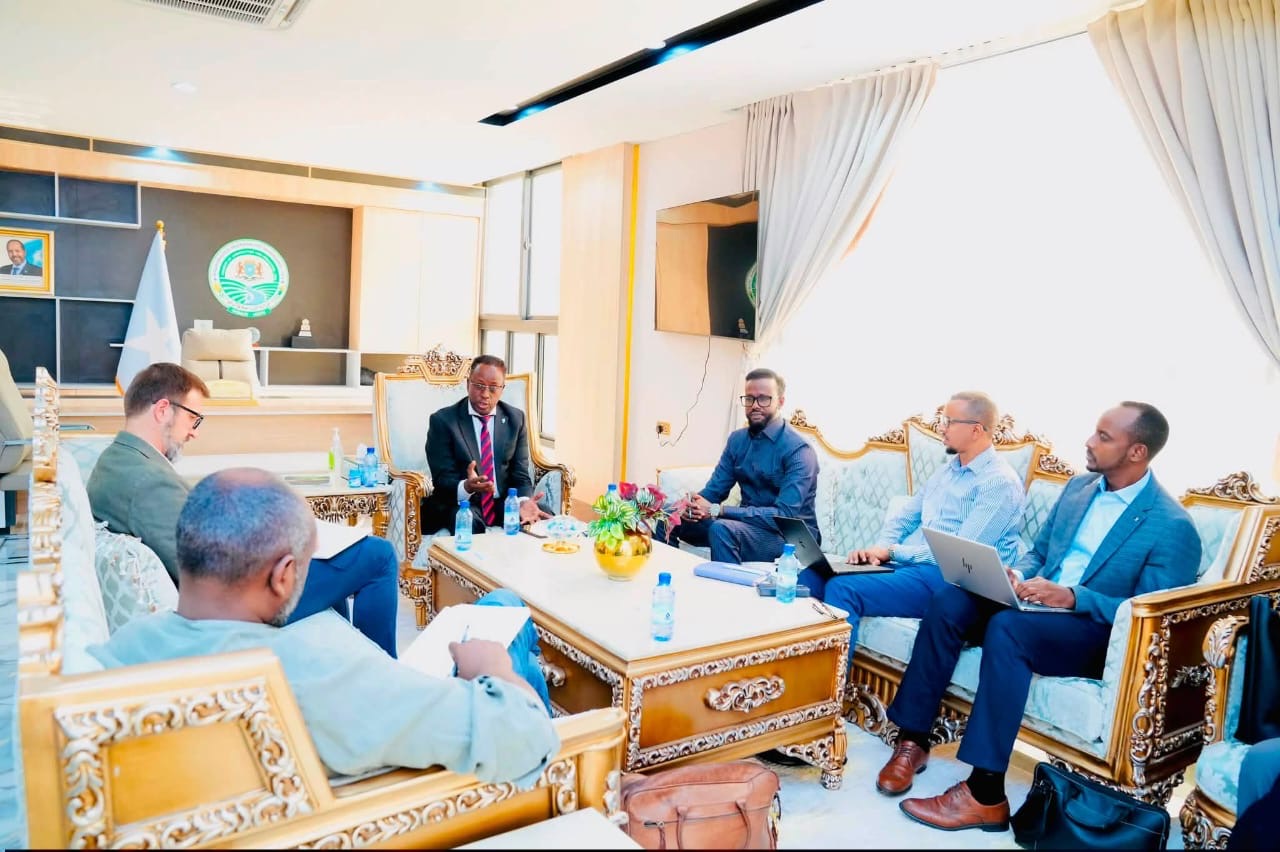
Agriculture Minister Mohamed Abdi Hayir Maareeye met a delegation from Refugees International, led by its president Jeremy Konyndyk and Abdullahi Halakhe, to discuss ways of using agricultural investment to support livelihoods and build more resilient communities.
The talks also focused on strengthening agricultural value chains, financing and rural infrastructure, with the two sides highlighting the potential for agriculture to create employment opportunities, particularly for young people and women.
A key issue was Somalia’s preparedness for possible El Niño-related weather risks later this year, including flooding, heavy rainfall and damage to crops.
Maareeye stressed the need to strengthen early-warning systems, water management and irrigation, as well as promote farming practices that can withstand increasingly unpredictable weather.
The discussions come as Somalia faces a difficult food-security outlook after successive climate shocks. The Food and Agriculture Organization has warned that the country could face significant flooding during the October-December rainy season if El Niño conditions develop, following a prolonged drought that has already damaged agricultural and pastoral livelihoods.
The UN agency says about 6 million people in Somalia were facing crisis-level food insecurity or worse in the April-June period, while the country’s humanitarian response continues to face funding pressures.
For Somalia, the challenge is not only to respond to the next climate emergency but also to rebuild an agricultural sector capable of providing more reliable food and income. Agriculture remains an important source of livelihoods, while repeated droughts and floods have left many rural households vulnerable to displacement and dependence on humanitarian assistance.
The meeting therefore placed emphasis on longer-term investment alongside emergency preparedness, including developing agricultural value chains and infrastructure that can help farmers recover and connect production to markets.
The two sides also underscored the importance of international cooperation in climate adaptation, livelihood recovery and building a more resilient food system in Somalia.