
Somalia Urges Inclusive AI Governance at U.N. Summit in Geneva
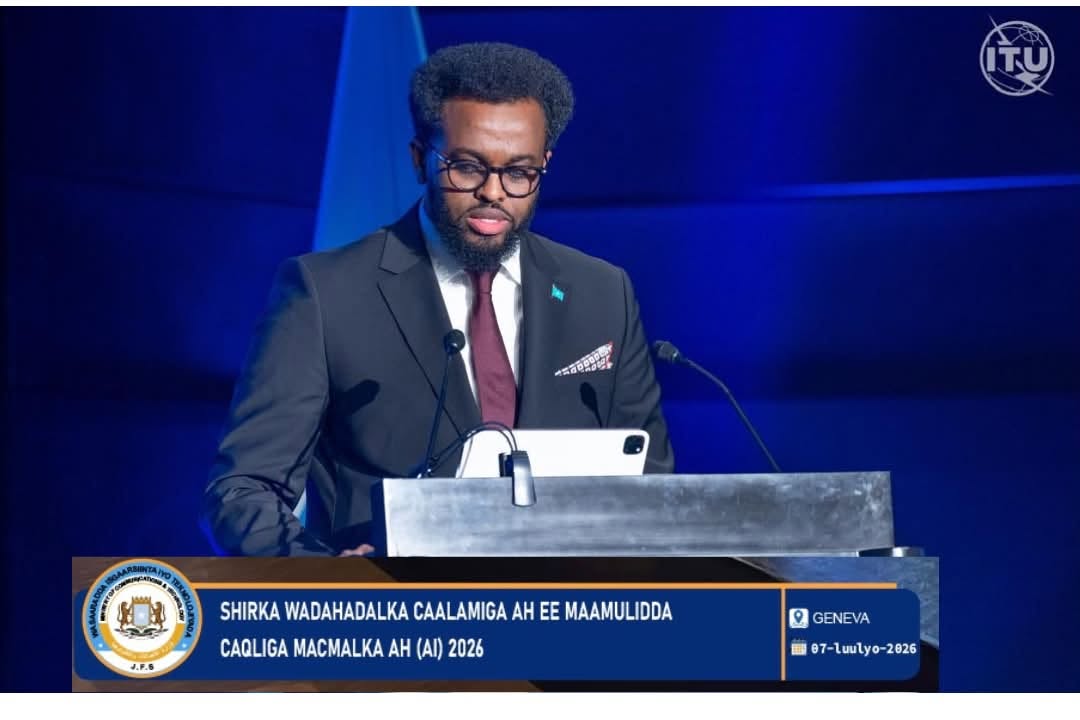
GOOBJOOG NEWS | GENEVA: Somalia called for stronger international cooperation on the governance of artificial intelligence (AI) during its first participation in the United Nations Global Dialogue on AI Governance, as developing nations seek a greater role in shaping global rules for the fast-evolving technology.
Communications and Technology Minister Mohamed Adam Moalim represented Somalia at the two-day dialogue and the AI for Good Global Summit 2026 in Geneva, where ministers, policymakers, technology experts and representatives from U.N. member states met to discuss how AI can be governed in a way that balances innovation, safety and equitable access.
The meeting, convened by the U.N. through UNESCO and the International Telecommunication Union (ITU), was opened by U.N. Secretary-General António Guterres, who has repeatedly called for international cooperation to ensure AI develops in a manner that benefits all countries rather than widening existing global inequalities.
Speaking during the summit, Moalim said artificial intelligence has the potential to improve public service delivery, support economic growth and spur innovation in countries such as Somalia, but argued that global governance frameworks should be inclusive and reflect the interests of developing nations.
He said countries with emerging digital economies continue to face significant obstacles, including limited digital infrastructure, unreliable energy supplies, shortages of high-quality data and a lack of AI-related skills. Addressing those gaps, he said, would require stronger international partnerships and broader access to technology and expertise.
The minister said Somalia was committed to working with the United Nations and international partners to promote AI governance that is safe, secure and inclusive, while supporting sustainable development.
Somalia’s participation marks its first appearance at the global AI governance dialogue, reflecting the country’s efforts to expand its engagement in international discussions on digital transformation. In recent years, Mogadishu has stepped up initiatives aimed at modernising public services, expanding digital connectivity and strengthening its information and communications technology sector as part of wider state-building and economic reform efforts.
The Geneva discussions come as governments worldwide accelerate efforts to establish common standards for artificial intelligence amid growing concerns over the technology’s rapid development, cybersecurity risks, misinformation, privacy and its potential impact on jobs. Developing countries have increasingly argued that future AI governance frameworks should ensure they are not left behind as global regulations and standards take shape.
For Somalia and many other African countries, participation in such forums is seen as an opportunity to influence international policy discussions while seeking partnerships that can help bridge the continent’s digital divide and expand access to emerging technologies.