
Somalia’s First Maritime Conference Charts Course for Blue Economy Ambitions
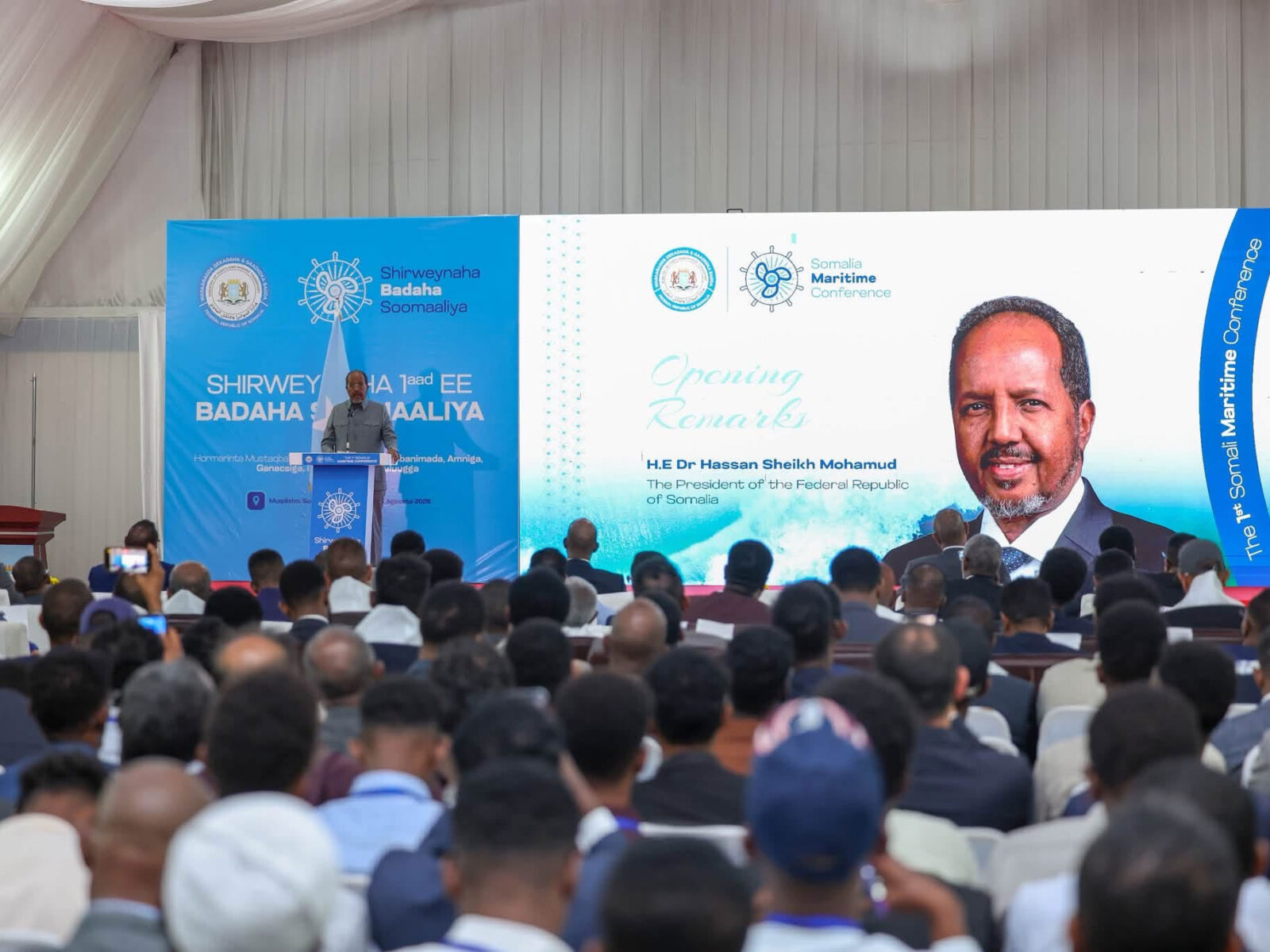
GOOBJOOG NEWS | MOGADISHU: Somalia’s first national Maritime Conference entered its second and final day in Mogadishu on Wednesday, with senior government officials, financial leaders, business executives and maritime experts calling for greater investment, stronger governance and closer cooperation to unlock the country’s vast maritime potential.
The two-day gathering has become a platform for discussing how Somalia can transform one of Africa’s longest coastlines into a driver of economic growth, employment and regional trade, while addressing longstanding challenges including illegal fishing, weak infrastructure and maritime insecurity.
Speaking during the conference, officials said the development of modern ports, fisheries, shipping and other maritime industries would be central to Somalia’s long-term economic transformation.
“We want Somalia to have modern ports that contribute to job creation and economic growth,” Mogadishu Port Director Mohamed Ali Nur told delegates, outlining the government’s vision for expanding port infrastructure to support trade and investment.
Central Bank Deputy Governor Ali Yasin Sheikh said Somalia’s historical connection to the sea had yet to translate into broad economic prosperity.
“Somalis have always depended on the sea for their livelihoods. The challenge now is to expand maritime services and build the infrastructure needed to support a modern blue economy,” he said.
Business leaders echoed those views, arguing that unlocking Somalia’s marine resources will require stronger public-private partnerships and significantly more investment.
Ahmed Khadar Jama, chairman of the Somali Bankers Association, said financing large-scale maritime projects would require capital beyond the capacity of domestic banks alone, underscoring the need to attract regional and international investors.
Officials from Somalia’s Federal Member States also called for closer coordination in protecting territorial waters, combating piracy and illegal fishing, and ensuring coastal communities benefit from future maritime development.
Somalia’s Special Envoy for the Red Sea, Gulf of Aden and the Horn of Africa, Ambassador Yusuf Garaad Omar, highlighted the importance of international maritime conventions, saying they provide the legal framework needed to safeguard Somalia’s maritime rights and strengthen cooperation with other coastal states.
The conference builds on remarks by President Hassan Sheikh Mohamud, who opened the event on Tuesday by describing the maritime sector as one of Somalia’s most valuable strategic assets. He urged domestic and foreign investors to look beyond the country’s past security challenges and invest in fisheries, ports, shipping and other sectors of the blue economy.
The forum also comes as Somalia seeks to deepen maritime cooperation with international partners. Turkey recently announced plans to deploy fishing vessels to Somalia, while the two countries have expanded cooperation on maritime security, fisheries and offshore resource development as part of broader efforts to strengthen Somalia’s maritime sector.
For decades, Somalia’s 3,300-kilometre (2,050-mile) coastline, Africa’s longest on the mainland, has remained largely underdeveloped despite its strategic location along some of the world’s busiest shipping routes linking the Indian Ocean, the Gulf of Aden and the Red Sea.
Illegal, unreported and unregulated fishing has cost the country hundreds of millions of dollars annually, while recurring piracy and limited maritime infrastructure have constrained investment and economic growth.
Participants say the conference marks the beginning of a longer process rather than a one-off event. Discussions are expected to feed into a national maritime strategy aimed at strengthening governance, modernising ports, promoting sustainable fisheries, protecting marine ecosystems and positioning the blue economy as a cornerstone of Somalia’s economic development.
As the conference concludes, attention will turn to how quickly the proposals discussed in Mogadishu can be translated into policy, investment and tangible benefits for the millions of Somalis whose livelihoods depend on the sea.