
UN Urges Continued Dialogue Amid Somalia’s Deepening Political Deadlock
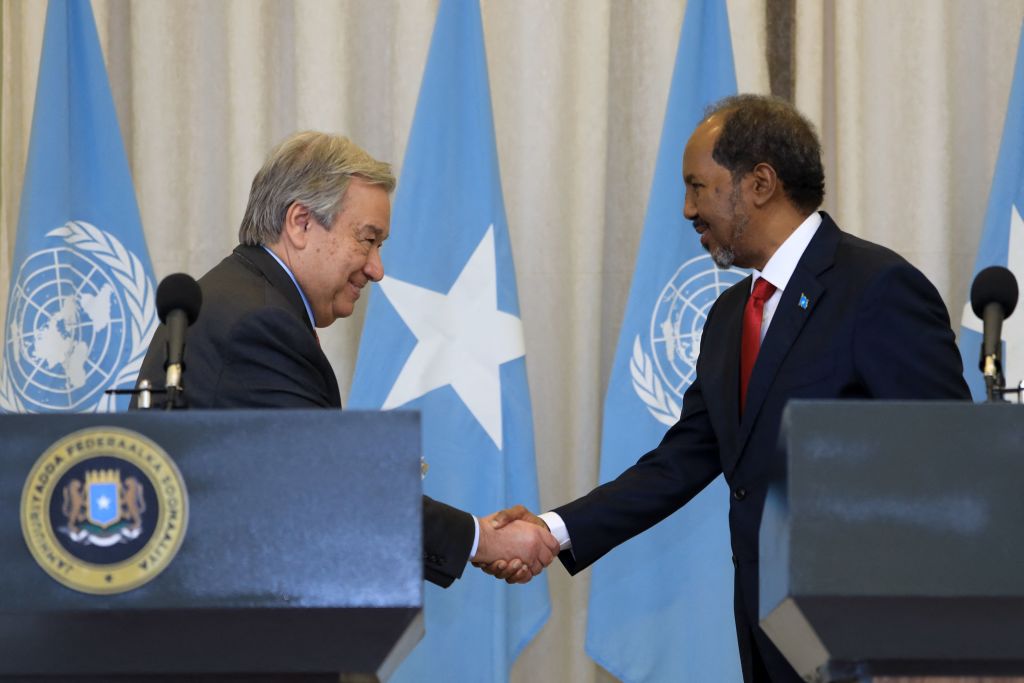
GOOBJOOG NEWS| NEW YORK: The United Nations has urged Somali political leaders to continue dialogue following recent consultations between the Federal Government of Somalia and opposition figures over the country’s electoral process and political future.
In a statement attributed to the Spokesperson for the UN Secretary-General, the UN welcomed the engagement between the two sides and encouraged continued negotiations aimed at resolving outstanding political issues.
“The Secretary-General welcomes the commitment of the parties to continue dialogue and encourages them to work towards reaching consensus on priority national issues, including the electoral process,” the statement said.
The UN also stressed the importance of inclusive dialogue and broad political consensus to preserve stability and advance a credible and widely accepted electoral process in Somalia.
The talks, held at the Halane compound in Mogadishu, ended without a breakthrough after days of discussions between the Federal Government and opposition politicians under the Somali Future Forum umbrella.
The opposition has accused the government of pursuing unilateral constitutional amendments and attempting to restructure the country’s electoral framework without broad political consensus. Opposition leaders are demanding an inclusive national dialogue and agreement on the electoral model before any further steps are taken toward elections.
The political standoff has intensified in recent months following disagreements over the transition from Somalia’s indirect clan-based voting system to a proposed one-person, one-vote model. Critics argue that the country’s security and political conditions are not yet suitable for universal suffrage, while the government insists reforms are necessary to complete Somalia’s democratic transition.
Tensions further escalated after the expiry of President Hassan Sheikh Mohamud’s term on May 15 under the previous Provisional Constitution framework through which he was elected, adding pressure on political stakeholders to reach a settlement on the electoral process and governance arrangements.
The continuing deadlock has raised concerns among international partners over the risk of instability and uncertainty ahead of the next electoral cycle.