
Reflections: The Day Somalia Kicked Out The UN’s Top Diplomat
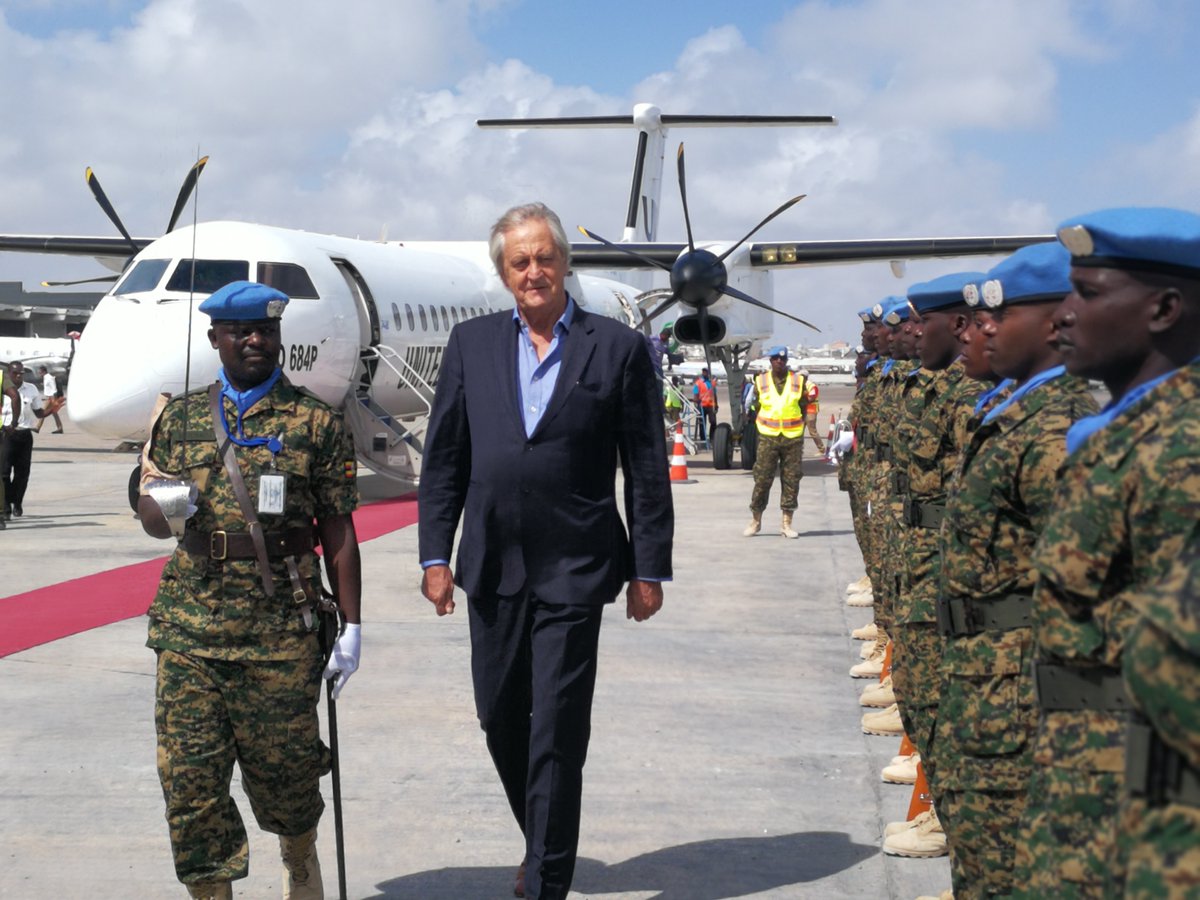
Welcomed in Mogadishu in October, Nicholas Haysom was declared unwelcome on New Year’s Day. As the UN political mission approaches its scheduled closure, Goobjoog revisits its reporting on the election dispute, civilian killings and demands for answers that preceded his expulsion.
By T. Roble
On the evening of January 1, 2019, Somalia’s foreign ministry announced that Nicholas Haysom could no longer work in the country on behalf of the United Nations Secretary-General.
Barely three months earlier, government officials and UN staff had welcomed him at Mogadishu’s Aden Adde airport. Now, the government accused its international partner’s most senior political representative of violating diplomatic rules and Somalia’s independence.
The announcement followed his demands for explanations about the arrest of South West presidential candidate Mukhtar Robow and violence in Baidoa that had left a reported 15 people dead, including a state legislator. Haysom had asked questions about the government’s conduct. The government responded by declaring him persona non grata.
As the UN political mission approaches the scheduled end of its transition, Goobjoog’s archive records how an electoral crisis became a diplomatic rupture. UNSOM, which Haysom headed, ended its mandate in October 2024. Its successor, UNTMIS, began a transition scheduled to conclude by October 31, 2026.
RELATED COVERAGE: UN mission mandate and transition timetable
Haysom’s arrival on October 3, 2018, had placed him immediately inside Somalia’s difficult electoral politics.
Replacing British diplomat Michael Keating, the South African international lawyer brought experience in governance, constitutional reform and reconciliation. Goobjoog’s arrival report outlined the approaching tests: South West’s presidential election, then Puntland’s, with national polls anticipated in 2020.
South West would become the decisive confrontation of his brief assignment.
READ MORE: The newly appointed UN envoy Haysom arrives in Mogadishu
At the centre of that contest was a man whose relationship with President Mohamed Abdullahi Farmajo’s administration had undergone a sharp reversal.
Robow, a former Al-Shabaab deputy leader, surrendered to South West authorities in August 2017 and publicly renounced the group in Mogadishu. He subsequently made visits to Baidoa accompanied by federal officials and security personnel.
Goobjoog’s December 2021 examination of the relationship recalled that Robow had enjoyed the administration’s backing as he moved towards a presidential bid. He announced his candidacy on October 4, 2018, a day after Haysom arrived in Somalia, and received his electoral clearance certificate on November 25.
Within weeks, the federal government had turned against his candidacy. On December 13, he was arrested in Baidoa and flown to Mogadishu. The government said he had not completed the reintegration process for former extremists and was ineligible to stand. Its former ally had become a detainee.
RELATED COVERAGE: Fact check: Politics and not security separated Robow from Farmaajo
The arrest triggered demonstrations.
By December 15, Goobjoog was reporting Amnesty International’s condemnation of civilian killings. The rights organisation identified a state legislator and a young boy among those shot dead and said three other people were being treated for bullet wounds.
Responsibility for the arrest was contested. Goobjoog reported that Ethiopian troops had detained Robow. AMISOM denied that its personnel were involved; Ethiopian forces operated in Somalia both within and outside the African Union mission.
The federal government defended the detention, saying Robow had ignored warnings against standing while sanctions remained an issue. It also accused him of bringing weapons and militia into Baidoa.
Amnesty demanded an investigation into the use of excessive force and accountability for those responsible. The election was scheduled for December 19.
READ MORE: Amnesty condemns civilian killings in Baidoa
Concern soon reached the arrangements through which international partners supported the police.
On December 21, the European Union, Germany and Britain suspended assistance to South West police under the Joint Police Programme. Goobjoog reported that the restrictions covered stipend payments and preparations to recruit, vet and train another 400 officers. Support for federal police and other state police services would continue.
Haysom was also seeking answers.
In correspondence with the federal authorities, he questioned the legal basis for Robow’s arrest and raised the detention of more than 300 people, including children, during the demonstrations. Goobjoog’s January 1 report said the government’s response acknowledged the involvement of UN-supported Somali police.
The dispute therefore reached beyond the eligibility of a presidential candidate. It concerned the conduct of security forces receiving international assistance and the treatment of people protesting in the streets.
READ MORE: UN envoy demands answers on the legal basis for Mukhtar Robow’s arrest
The letter also questioned the terms of Robow’s amnesty and whether his detention could amount to arbitrary arrest.
Then came a public warning. National Security Adviser Abdisaid Ali posted a quotation attributed to the late Kenyan minister John Michuki: “If you rattle a snake, you must be prepared to be bitten by it.”
Goobjoog’s New Year’s Day account recorded the message as an indication of an approaching backlash. That evening, the foreign ministry announced that Haysom could no longer serve in Somalia.
Hours earlier, mortar shells had struck the UN compound in Mogadishu, injuring staff. The attack and the expulsion announcement made for a grim opening to the year, though Goobjoog’s report established no connection between them.
READ MORE: New Year: Somalia kicks out UN country chief
At UN headquarters, the initial response was cautious.
In a January 3 report, Goobjoog quoted deputy spokesman Farhan Haq saying officials were corroborating details before determining their next steps. Mogadishu’s allegations were already explicit: interference in sovereign affairs and breaches of diplomatic protocol.
READ MORE: UN investigates expulsion of its top diplomat from Somalia
By Friday, January 4, Secretary-General António Guterres had set out a position that defended Haysom while accepting the need to replace him.
He expressed regret over Somalia’s decision and confidence in the envoy’s experience and record. The UN also rejected the applicability of the persona non grata doctrine to its personnel.
But Guterres said the mission needed to carry out its mandate effectively in support of Somalia. He would therefore appoint a new special representative.
The envoy retained his chief’s backing. His assignment in Somalia was nevertheless coming to an end.
READ MORE: UN chief António Guterres to appoint new diplomat to Somalia
The argument about what the expulsion meant continued in Goobjoog’s opinion pages.
On January 21, regular commentator Dr. Mohamud M. Uluso argued that Farmajo had acted to prevent accountability and justice for Somali victims. He linked the decision to Haysom’s December 30 letter and an impending Security Council assessment of Somalia.
Uluso challenged the government’s sovereignty argument, maintaining that the envoy had been carrying out his responsibilities by requesting information about alleged abuses. That was his interpretation, published as commentary with a disclaimer distinguishing it from Goobjoog’s editorial position.
RELATED COMMENTARY: President Farmajo expelled UN envoy to deny accountability and justice to Somali victims
The archive preserves both the suddenness of the expulsion and the events that preceded it. A diplomat arrived to support Somalia through sensitive political contests. One of those contests brought the arrest of a former government ally, deadly protests and the suspension of police assistance. His demands for explanations then became the subject of a confrontation over sovereignty.
Three months after the airport welcome, Haysom was unwelcome. The questions about Baidoa — the deaths, the detentions and the conduct of internationally supported forces — remained.